In January 2019, a group of French researchers drove into the Citrusdal Mountains, at the northern edge of South Africa’s Western Cape, and started taking cuttings from vines older than most of the people working them. Citrusdal is one of the hottest dry-farmed winegrowing districts in the country. No irrigation. No trellis wires in many of the old blocks. Just bush vines standing alone in the heat like a field of small gray fists.
The researchers were from InterLoire, the organizing body of France’s Loire Valley, and they’d come to collect Chenin Blanc.
That’s a strange errand. Chenin is a French grape. The Loire is its ancestral home, where it’s grown since at least the fifteenth century, the source of Vouvray and Savennières and every reference point the variety has. France didn’t need to fly to the bottom of Africa to find Chenin Blanc.
Except that it did.
What the French team found in those old Cape vineyards were Chenin Blanc selections that no longer exist in France. Extinct at home, alive in South Africa, in blocks nobody had thought were important, because for most of the twentieth century nobody thought Chenin was important. Fifteen of them are now planted in a clonal garden in the Loire Valley, where they arrived in 2023 after three years of virus testing and quarantine. France gave South Africa this grape roughly 370 years ago, and South Africa has started giving it back.
How that happened is a much better story than anything I could tell you about what the wine tastes like.
And it starts with pepper.
Why the Dutch planted vines at the Cape
At the beginning of the seventeenth century, the most valuable trade on earth ran east. Pepper from Java and Sumatra. Cloves and nutmeg from the islands of what’s now Indonesia. Silk, tea and porcelain behind them.
In 1602 the Dutch consolidated their competing ventures into a single enterprise, the Vereenigde Oostindische Compagnie, the VOC. Calling it a company undersells it. It could raise armies, wage war, sign treaties and found colonies, and its shares traded publicly, which makes it a fair candidate for the first modern corporation. It behaved less like a business than a state that happened to sell nutmeg. What it had was one enormous logistical problem, which was that Asia is very far from Amsterdam. Ships spent months at sea. Fresh food ran out, water went bad, and scurvy could wreck a crew before it ever reached the spice islands. The VOC needed somewhere to stop.
In 1652 Jan van Riebeeck sailed into Table Bay with orders to build an outpost. He wasn’t a wine romantic so much as a company man working off a black mark, a trained surgeon who’d run a VOC post in what’s now Vietnam until he was caught trading privately on the side. The Cape was his route back. His job was to grow vegetables, secure meat and water, get sick sailors upright and send them onward.
Vines were part of the plan for a medical reason. Seventeenth-century Europeans believed wine helped against scurvy. It turns out that it doesn’t. Wine contains essentially no vitamin C, and the cabbages were doing the real work.
Regardless, grape cuttings went into the ground in 1655. On February 2, 1659, van Riebeeck wrote the sentence every South African wine writer eventually quotes: “Today, praise be to God, wine was made for the first time from Cape grapes.” The yield was about twelve bottles. He spent the years after it trying to talk the free burghers into planting cuttings of their own, and by his own account they were indifferent to the whole idea.
Still, South Africa can do something almost no old wine country can. It can point at an exact date. Burgundy dissolves backward into monastic bookkeeping. Ask when Italy started and you’ve asked an archaeological question. South Africa has a Tuesday.
What it doesn’t have is a record of which grapes went into that press. Chenin was probably among the early material, but turning the 1659 wine into a Chenin Blanc makes the history tidier than the evidence allows, and the truth is stranger anyway. For the next three centuries, South Africans grew enormous quantities of their most important white grape without knowing what it was.
Why South African Chenin Blanc was called Steen
They called it Steen, and the name itself pointed people in the wrong direction for two hundred years. Governor Simon van der Stel had once noted that wine made from Steen compared well with good German Stein wine, which looked like a clue about where the grape came from. Researchers went looking east, into Germany and beyond, and nothing matched, because it was never there.
The question got settled in 1963 by Professor C.J. Orffer, head of viticulture at Stellenbosch University, who compared Steen leaves against Chenin Blanc leaves from France.
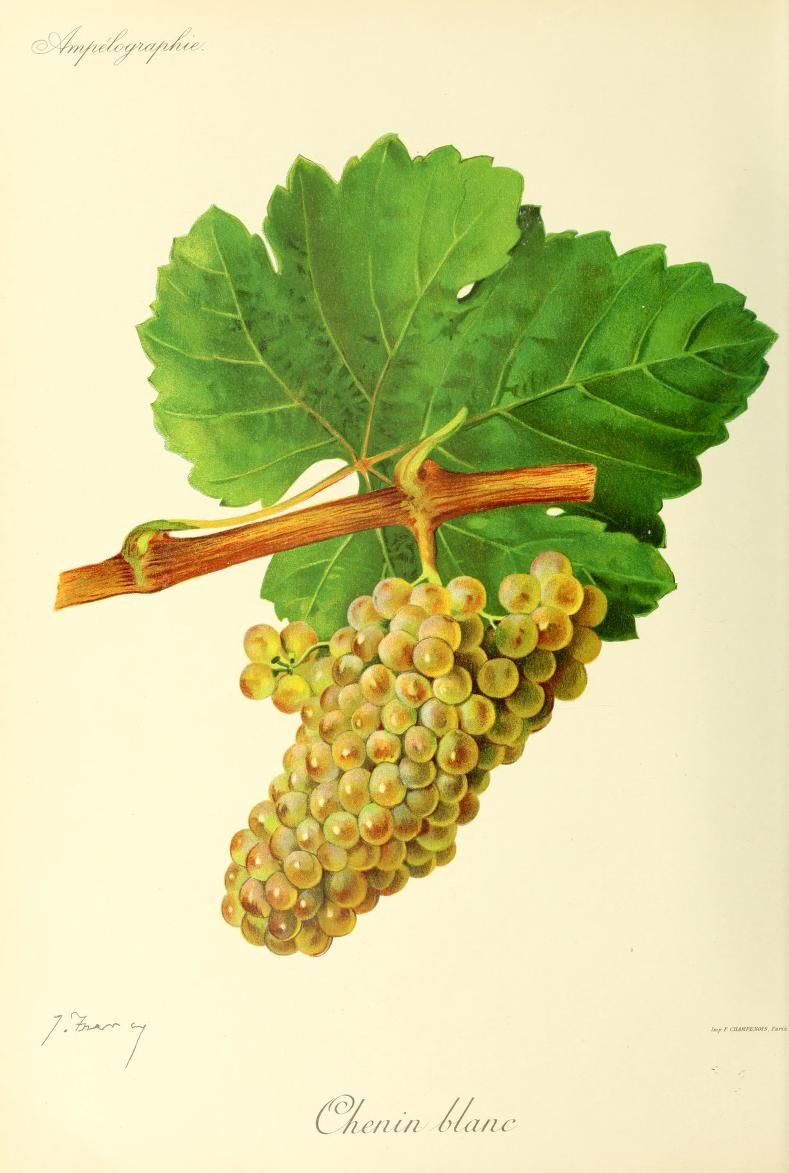
They were the same vine.
No DNA sequencing, no genetic database. Orffer worked in ampelography, the practice of identifying a grapevine by looking at it very carefully: the shape of the leaf, the depth of the notches between its lobes, the teeth along its edge, the hair on its underside. It’s closer to birding than to chemistry, it takes a career to get good at, and DNA testing has mostly retired it as a discipline. Three hundred and four years after that first pressing, somebody looked hard enough at a leaf and South Africa learned the name of its favorite grape.
And then, one year later, it sold more of it than anyone had ever sold of a white wine.
Lieberstein, and thirty-one million litres
In 1964 Stellenbosch Farmers’ Winery moved roughly 31 million litres of Lieberstein, a semi-sweet white built mostly on Chenin. By most accounts it was the biggest-selling white wine in the world. In 1963 the country confirms what the grape is. In 1964 that grape becomes an international commercial phenomenon.
Nobody was discussing soil types. Chenin wasn’t a variety in the way we use the word now. It was infrastructure.
Why Chenin Blanc grows so well in South Africa
Chenin Blanc produces unusually high levels of acid, particularly malic acid, and holds onto it through heat that would flatten most white varieties.
In a hot climate that’s close to a superpower. Grapes burn through malic acid as they ripen, and the warmer it gets the faster it goes, which is why hot-climate whites so often taste flabby and why winemakers in warm regions frequently add acid back in a tank. Chenin starts with such a surplus that Cape heat couldn’t strip it all out.
In the Loire, the same trait can become a liability. Jancis Robinson puts it well: Chenin’s acidity is useful in a warm climate but can verge on the painful in the Loire’s coolest vintages. In a bad Loire year you get a wine that’s mostly acid and not much else, and underripe Chenin is one of the least pleasant things in wine. So the grape that could be brutal in Anjou was ideal at the Cape.
It came with other conveniences. It carried heavy crops, handled wind and disease, and ripened late into a long dry Cape autumn. And a neutral, high-acid, high-yielding white is exactly what a brandy still wants, which mattered enormously, because for most of the twentieth century South African wine economics were brandy economics. The KWV, the growers’ cooperative founded in 1918, spent decades setting minimum prices and quotas and absorbing the country’s surplus into distillation. It was an apparatus built to reward volume, and Chenin was the best volume grape available. By 1988 it occupied 33.2 percent of the entire South African vineyard land. One variety, a third of the country.
Push Chenin’s yields hard enough and the acidity collapses along with everything else. Overcropped Chenin makes some of the dullest white wine on earth. The grape got rewarded and punished for the same characteristic, and for fifty years the industry mostly chose the punishment.
Why South Africa’s Chenin plantings collapsed
Chenin now sits at roughly 18 percent of the national vineyard land, about 15,900 hectares, down from 33.2%. The total planted vineyard land shrank over the same stretch, so the loss in hectares is steeper than those percentages make it sound. The Chenin Blanc Association puts it plainly: Chenin became the most widely uprooted variety in South Africa, year after year.
The tidy version of this story says South Africa’s old Chenin survived because people kept it. Mostly they didn’t. When export markets reopened in the 1990s and the world wanted Sauvignon Blanc and Chardonnay and Cabernet, an enormous amount of Chenin came out of the ground.
What tended to survive was whatever was hardest to justify replacing. Dry-farmed blocks on poor ground. Steep or awkward sites. Old bush vines already yielding half of what a modern trellised vineyard would, which meant the arithmetic on ripping them out and waiting five years never quite worked. The vineyards that made it through were, disproportionately, the ones nobody could make money from either way. A sixty-year-old dry-farmed Chenin bush vine has no wires and no support, just a squat gray trunk about the thickness of a forearm holding itself up over roots that have gone down metres hunting water. It gives a fraction of a normal crop, but a far more interesting wine.
The lawyer with a notebook, and the Old Vine Project
In 2002 a former lawyer turned vineyard manager named Rosa Kruger started driving around the Cape looking for old vineyards nobody had catalogued. There was no register, no map and no commercial reason to do it. She kept records anyway. Word spread, growers began calling her about strange old blocks on their own farms, and winemakers started following her: Eben Sadie, Chris Alheit, Duncan Savage, Chris and Andrea Mullineux. Sadie’s Mevrou Kirsten comes from the oldest Chenin vineyard in South Africa, in Stellenbosch, and is named after the farm owner’s wife.
Kruger’s work became the Old Vine Project, which now certifies vineyards of 35 years and older with a seal that prints the planting date on the bottle. South Africa has more than 5,400 hectares that qualify, and Chenin makes up roughly 52 percent of them. The oldest registered blocks went in during the 1940s. None of that certification would be possible except that South African vineyard records go back to 1900, which gives the country something almost nobody else has, which is provable vine ages, and a relict from that faithfully quoted Tuesday.
The workhorse had accidentally left behind an inheritance.
Why the Loire Valley came back for South African Chenin
So back to that January morning in the Citrusdal Mountains.
InterLoire approached the Cape nursery Vititec in 2018 asking for help selecting Chenin Blanc from blocks over forty years old. Vititec brought in Kruger and the Old Vine Project’s André Morgenthal. By 2019 the team had made 96 selections, and after virus testing and three years of quarantine, 15 of them went into the Loire’s clonal garden in 2023. Vines that left the Loire in the seventeenth century, then spent 370 years adapting in near isolation, had become something the homeland no longer had. Several selections also tested free of leafroll virus, which is rare in old vineyard material anywhere.
Every one of the 15 selections came from Citrusdal Mountain, one of the hottest dry-grown districts in South Africa.
The Loire is getting warmer. The French were shopping for heat tolerance, and the best available library of heat-adapted Chenin turned out to be in a country that planted it by accident, misnamed it for three centuries, and used it to make brandy.
France gave South Africa the grape. Three hundred and seventy years later, South Africa turns out to have been keeping it safe for France.
History may not look like it in hindsight, but it’s often a series of unintentional accidents, that look intentional working backwards.
How a Texas winery ended up in Robertson
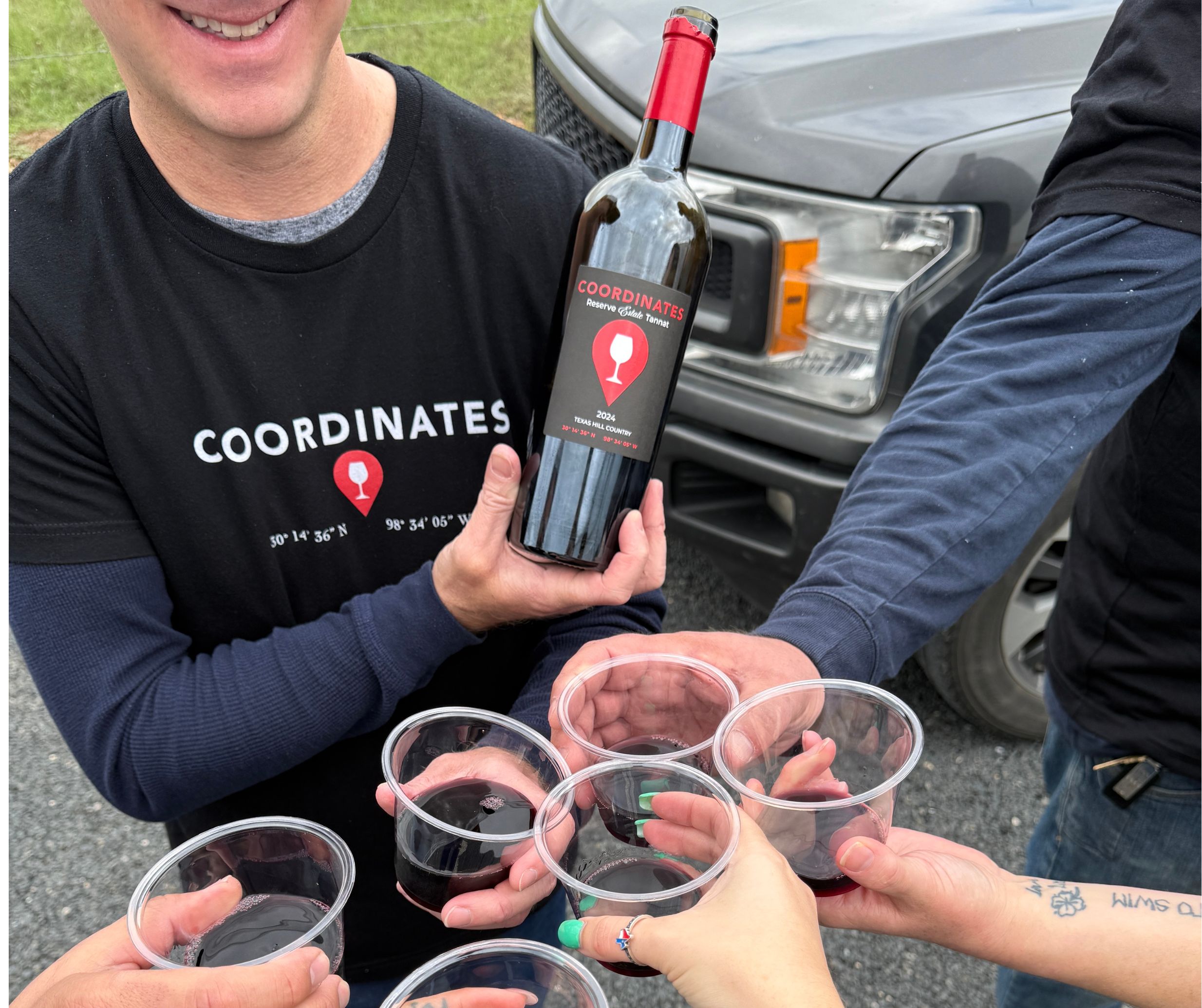
Coordinates Vineyards exists because of South African wine. I’ve told that story properly elsewhere, so the short version will do here: I was importing wine before any of this was a winery, a good deal of that work involved sourcing Pinotage out of the Cape, and the name on our bottles comes from a set of GPS coordinates a South African winemaker gave me.
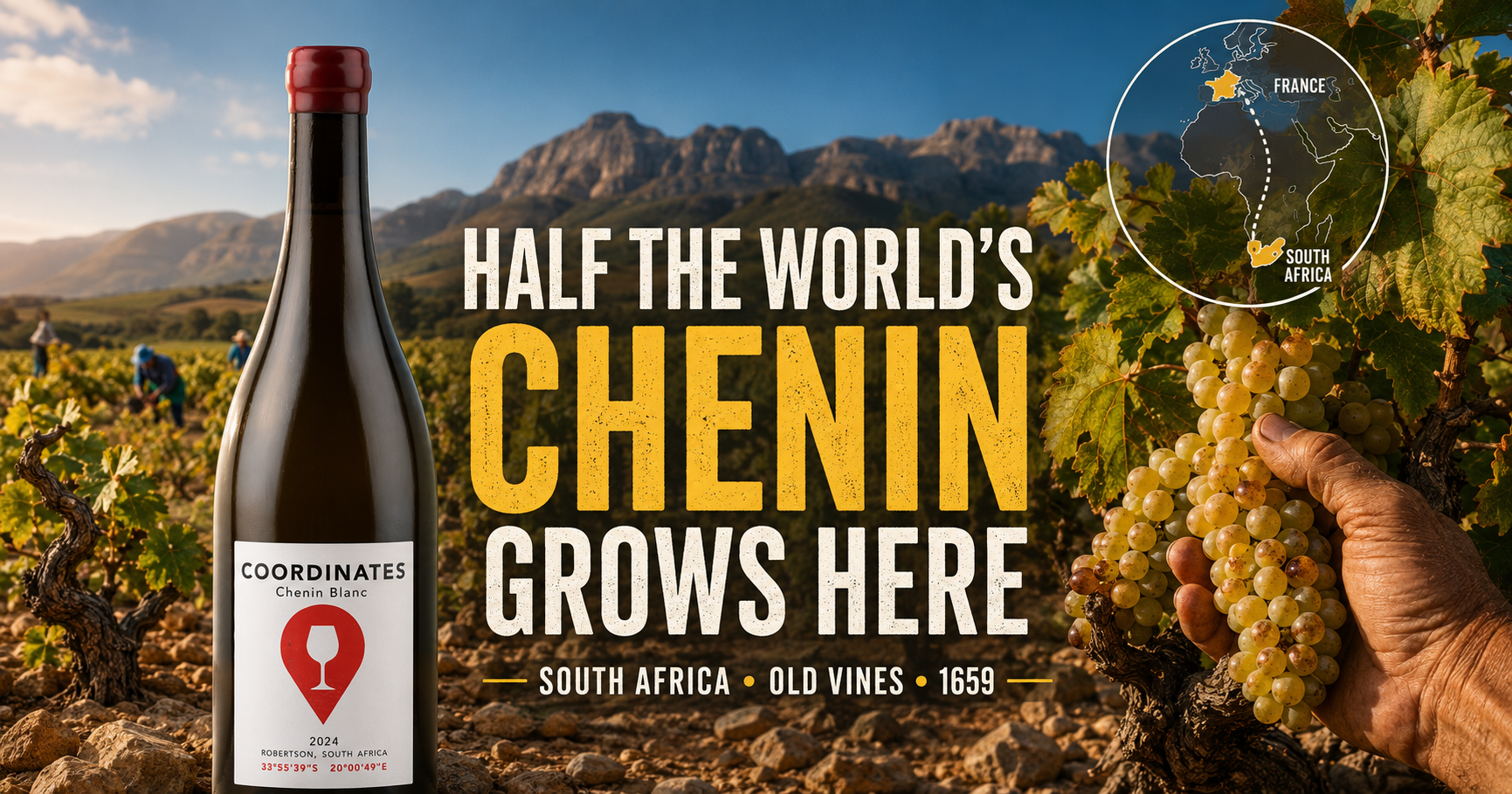
Which leaves the question of why Robertson specifically. When you put a serious Chenin Blanc on a Texas Hill Country list, South Africa is where the deepest bench is: roughly half the world’s plantings, four centuries of continuous experience with the variety in heat, and a generation of growers who’ve spent the last thirty years finding out how good it can be. Robertson adds what this particular wine needed. Lime in the ground, a fifteen degree drop every night, and a grower working single blocks rather than tanks.
Robertson, and the ground nobody wanted
Our Chenin comes from Arendsig, about a hundred miles east of Cape Town, and the dirt gives away the plot before you taste anything. Block J1 sits outside Bonnievale on the Bokkeveld Group, marine sediment laid down in the Devonian between roughly 390 and 340 million years ago, when this part of the world was underwater. It still carries the salt. The vineyard is 78 kilometres from the nearest coastline and it’s farming a seabed. Semi-arid, 240 millimetres of rain in an average year, and a fifteen degree swing between day and night, which is the only reason a grape ripens here and still holds its acid.
The lime that comes with the region has a side effect that has nothing to do with wine, and I’m including it anyway. Robertson vineyards compete for land with racehorse studs, and have for generations, because breeders want that limestone for bone development in young horses. The grape and the thoroughbred are after the same dirt. The horse people usually have more money.
Lourens van der Westhuizen is the fifth generation of his family on the farm and the first one to make wine on it. He came home in 2003 and asked his father for land. What he got was a slope nobody had bothered with, because there was nothing there to plant in. By his own account it was rock, not soil, and it took four months of work before a vine could go into the ground. That’s the same arithmetic that saved South Africa’s old Chenin. Easy ground gets planted with whatever is selling this decade.
What skin contact does to a white wine
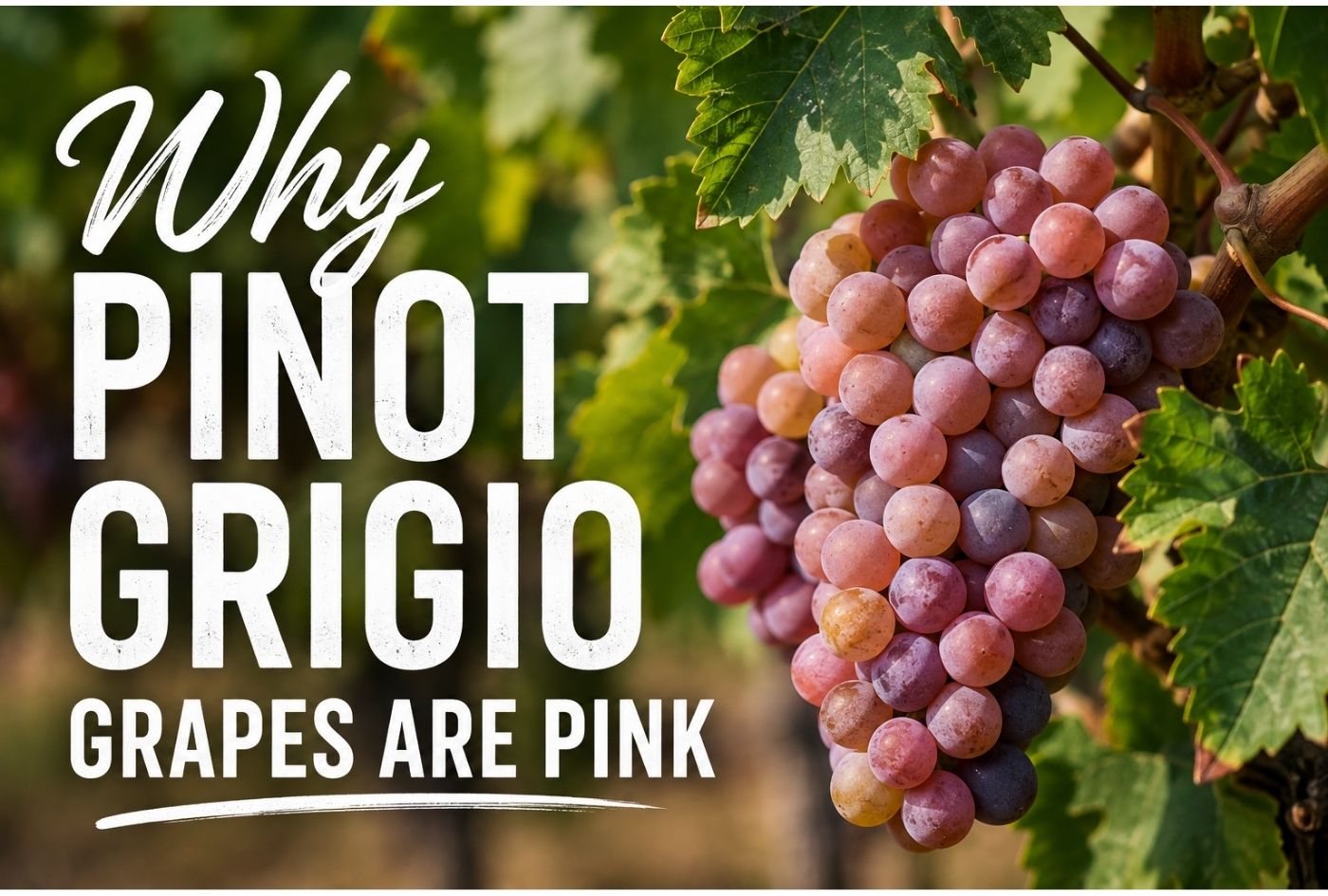
Leaving white juice on its skins before pressing pulls out pigment, phenolics and texture that a fast press leaves behind. It’s the same mechanism that decides why our Pinot Grigio comes out pale despite pink skins. It’s the reason this wine is a deeper color than most whites, and at Arendsig it’s also a way of using a fungus on purpose.
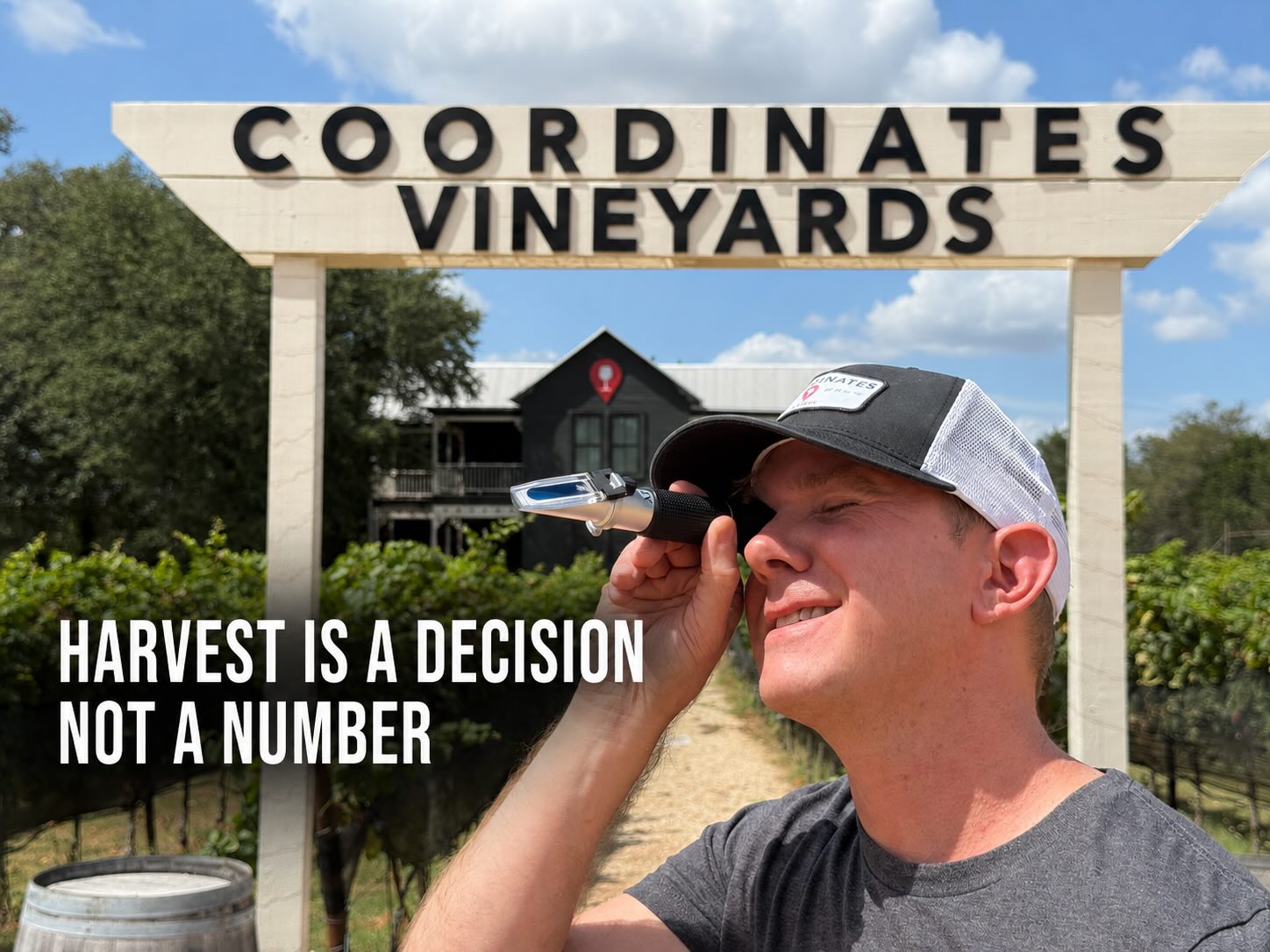
Lourens picks the block twice. About a fifth comes off early, near 19.5 Brix, while the acid is tight. The rest waits until roughly 23.5, but that number isn’t about sugar. It’s about waiting for something to happen to the skins.
Botrytis cinerea is the fungus every grower spends the season trying to prevent. In the wrong conditions it’s grey rot and it can take the whole crop. In the right conditions it’s the most valuable mold in agriculture. It needs moisture on the berry to establish and then needs the berry to dry out, which is exactly what morning fog followed by a hot afternoon delivers. The berry loses water, sugar and acid concentrate, and the fungus builds compounds that weren’t there before, including sotolon, the molecule behind the honeyed note in every botrytised wine you’ve had. It’s the same fungus behind Coteaux du Layon, Quarts de Chaume and Bonnezeaux, all of them botrytised Chenin. Ours is dry. The rot is there for honey and wax flavors, not sugar.
Here’s the part a textbook tells you not to do. Botrytis produces laccase, an oxidative enzyme that browns wine, keeps working after fermentation, and shrugs off the sulphur that stops most oxidation. Standard advice with infected white fruit is to keep skin contact short or skip it. Arendsig runs twelve hours of it deliberately, and what makes that survivable is temperature. The fruit is crushed, destemmed and chilled to five degrees before anything else happens, because cold slows the enzyme down.
Mahlon and I asked Lourens about this in his cellar in January.
“Why go through all the work, risk, and trouble of dealing with Botrytis?” I asked him.
His answer was three words.
“For the mouthfeel.”
That’s the difference between a winemaker and somebody writing about one. He wants a particular weight through the middle of the palate, and twelve hours on the skins is how he gets it.
When I told him that it seems like a lot of work for something most people won’t notice, his answer was just as clear.
“Then tell them about it.”
After fermentation, the wine goes into neutral oak, and giant concrete eggs for another twelve months on the lees, and through malolactic fermentation. The 2023 off this same block, handled the same way, finished at pH 3.21, with 6.7 grams per litre of total acid and 14.14 percent alcohol.
Fourteen percent alcohol, out of a semi-arid vineyard sitting on a Devonian seabed with 240 millimetres of rain, after a fermentation deliberately designed to reduce acidity, and pH still lands in the low 3.2s. Three hundred and seventy years ago, men who believed wine cured scurvy planted this grape at the bottom of Africa because it held its acid in the heat.
It still does.
Taste it first
I’m not going to give you tasting notes. Somebody else’s palate handed over before you’ve used your own is worth very little, and with a grape this variable it’s worth almost nothing.
Don’t serve it cold enough to hurt. Texture and weight disappear below about 50 degrees and you end up drinking temperature. Fifteen minutes out of the fridge, in a glass with some room in it. And don’t arrive expecting Chardonnay or Sauvignon Blanc, because it isn’t attempting either.
Nobody ever promoted this grape. Merchants wanted pepper, a company wanted healthier sailors, and a disgraced administrator planted vines against a disease they couldn’t cure. Everything after that was accident and arithmetic. Chenin Blanc simply outlasted every reason it had been planted for.
And now the French are growing cuttings from it.
We pour the Arendsig Chenin Blanc by the glass or the bottle at both of our tasting rooms: the restored blacksmith building on Main Street in Fredericksburg, and the hundred-year-old Vineyard Farmhouse out on Highway 290 in Hye. Come sit down and try it knowing nothing, then decide whether any of the above changed it.
It usually does.