Stellenbosch: history, precision, and a reminder of why place matters
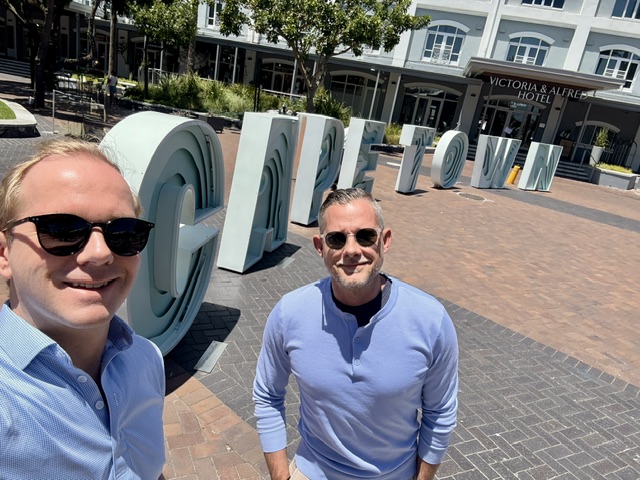
On the way toward Stellenbosch, we stopped at Clos Malverne, perched high with a view that makes you forget what your email inbox looks like. Perched on top of signal hill we saw the cannon from the 1700s used not for defense, but to signal the ships had come to port for produce.
Erich walked us through the vineyards and into a small sitting area inside old cellar walls. An owl perched quietly above.
“Pest control,” Erich said, and then the owl took off, mouse in claws, silhouetted against morning light like it was choreographed.
We tasted through a table of wines, some unlabeled, forcing us to rely on the only thing that matters: what’s in the glass. There were standouts, including our beautiful Pinotage we just released in December.
The property itself oozes history. Coming from the U.S., old places like this feel rare. In Stellenbosch, it’s part of the air.
Paarl: retracing the origin story
Then came Paarl, the stop I was most excited about.
This was where I first traveled years ago to meet Robert Frater, the winemaker behind our Reserve Pinotage and our Reserve Cab Blend, which are now in our library and available only for special events. In many ways, this farm is where Coordinates began to feel inevitable.
At first, I didn’t recognize the drive. Roads that used to be lined with vineyards now run alongside housing developments. Time leaves fingerprints everywhere.
But then we found it, the coordinates coming back to life like it was yesterday.
Through an open gate Robert no longer bothers locking, cork trees his grandfather smuggled in from Europe still lined the road. The pavement gave way to the familiar dirt. Mud memories rushed back. The farm had changed around him, but his piece of it felt eerily the same.
We climbed into Robert’s bakkie (pickup) and drove out into the vineyards. Guinea fowl clucked and ran ahead of us like tiny stubborn crossing guards.
“Pretty vines make pretty wines,” Robert said.
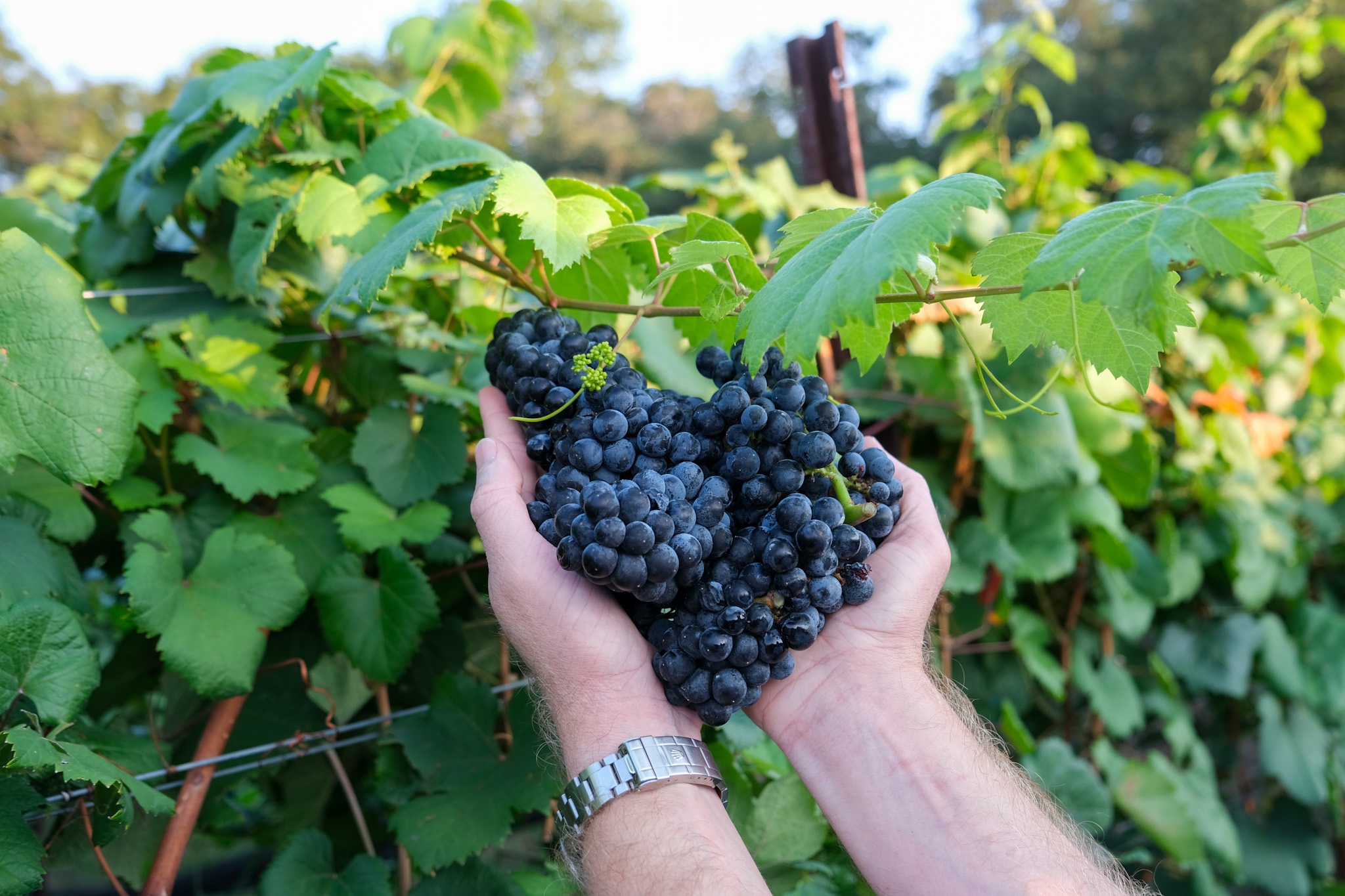
And his vines were stunning. Full leaves. Heavy clusters. Fruit just days out from harvest. We talked about red clay soils, dramatic mountains that refuse to fit in a photo, and how he manages the vineyard with minimal intervention. We tasted grapes off the vine, bright acidity, strong tannin structure, intensity that felt like a promise. Pinotage, Malbec, Cabernet Sauvignon.
I asked why there weren’t bird nets, because in Texas birds can be relentless.
“Say the birds eat 0.1 hectares,” he said. “We just plant 1.1 hectares and don’t worry.”
That line stuck with me. It’s both practical and poetic, and it says something about how these growers think: don’t panic, plan better.
We talked about farming, theft, resilience, and the dark humor that people sometimes develop when they’ve had to rebuild more than once. Robert is quick, clever, funny in a way that catches you off guard. He’s also deeply serious about what he does.
“All wine in South Africa is made in the vineyard,” he said.
Meaning: you can’t “fix it” later. The choices are made in the rows, under the sun, in the dirt.
In his cellar, he showed us repairs, open-top fermentation tanks that carry generational history, and then he pulled out a bottle from 1977, Mahlon’s birth year, and offered it as a gift.
“It’s probably not drinkable,” Robert said as he handed us the nearly 50-year-old bottle. But the level was still well above the shoulders, suggesting that the dark hole he pulled it from, still covered in dust, had been an optimal storage place.
We only had carry-ons.
We couldn’t take it.
But I’ll remember the gesture longer than I’d remember the wine. That’s the real currency of trips like this: relationship, trust, and the sense that what we’re building is bigger than any single vintage.
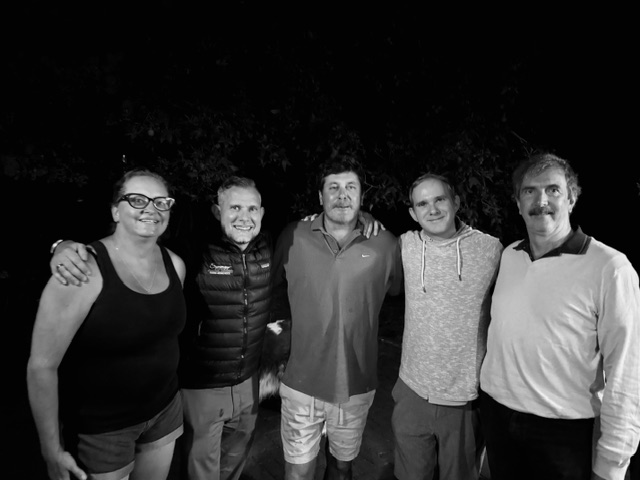
That night we braaied (barbecued) at his house as the mountains turned dark and the temperature dropped for the first time since we arrived. Sweaters on. Wood fire going. A beautiful new Malbec/Cab Franc in the glass. Stories unfolding on the table.
It felt like the kind of moment you don’t manufacture. You earn it over years.
Those moments are why a wine tasting in Hye, Texas is never just about what’s poured. When people make the drive out to our vineyard, they’re stepping into this story, the people behind it, and the places that shaped it long before the first bottle ever reached the Hill Country.
Tomorrow we step into what comes next, meeting the new guard in South African winemaking and the women reshaping its future, one harvest at a time.